

The Priviledge of Practcing Dhamma
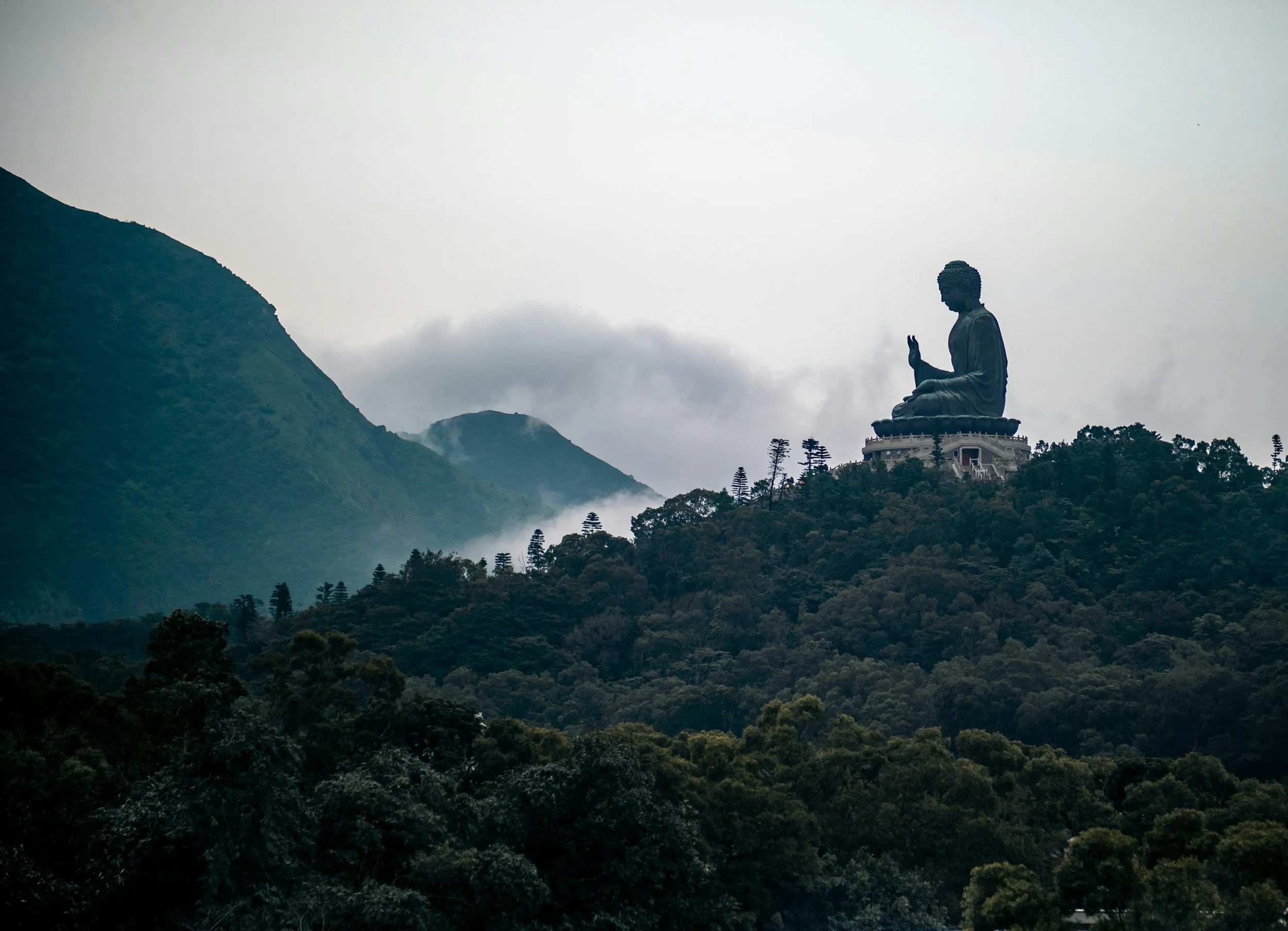
Recently, our sangha had the joy of welcoming Sharon Shelton as a guest teacher. Among the many gifts of her talk, she paused to reflect on what a profound privilege it is to be able to study and practice the Dhamma. I have spent a lot of time feeling grateful for having found this path, and gratitude has always felt like the right response. But Sharon's framing stopped me in my tracks. Privilege is a different word. It points to something beyond personal good fortune and asks us to really look at the conditions that made it possible, and to recognize that so many others do not share those same conditions.
The thought has stayed with me, gently persistent, the way a good question does.
It called to mind a teaching from the Buddha that I have always found both humbling and stirring. In the Chiggala Sutta (SN 56.48), sometimes called "A Yoke with a Hole," the Buddha asks his monks to imagine a blind sea turtle living at the bottom of the vast ocean, surfacing for air just once every hundred years. On the surface of that same ocean floats a single wooden yoke, a small ring with a hole in the center, drifting wherever the wind and currents carry it. The Buddha asks: what are the chances that when the turtle finally surfaces, it pokes its head through that yoke? The monks acknowledge it would be possible, but only just barely, an almost unimaginable coincidence across immeasurable time and space. This, the Buddha says, is how rare a human birth is.
And yet, even being born human is only the first miracle.
Think for a moment about all the reasons a person might have a human life and still never encounter the Dhamma. Some people are stretched so thin by the work of basic survival, finding food, keeping a roof overhead, caring for their families, that there is simply no bandwidth left to seek a spiritual path. That is not a failure of will; that is the weight of circumstance. Others live in places where there is no sangha, no teacher, no tradition within reach. The Dhamma may exist somewhere in the world, but it is not floating anywhere near them.
Some carry ideas about what Buddhism is, perhaps it seems foreign, or overly religious, or entangled with cultural associations that don't resonate, and so they keep their distance without ever really getting close enough to see it clearly. Others may have experienced religion as a source of harm and approach anything with a spiritual flavor with understandable wariness. Still others are navigating mental health struggles, trauma, or grief so acute that the inner stability needed to sit and look inward feels entirely out of reach. There are people dealing with disabilities or chronic illness that make attending a class or a retreat simply inaccessible. And sometimes it is just timing, the right teacher, the right moment, the right sentence hasn't arrived yet.
This is what privilege really means. Not just luck, but a particular alignment of conditions, resources, access, and circumstances. When I hold all of this, the word gratitude, as beautiful as it is, feels like only part of the picture. Privilege asks more of me. It asks me to see clearly, to not take this for granted, and to consider what it means to hold something this rare.
And with that comes a sense of responsibility, not heavy or obligatory, but warm and sincere. If this path found me in part because of conditions I did not create myself, then the most meaningful thing I can do is honor it by actually walking it. To let it make me kinder, a little more patient, a little more present. To live in a way that might, in some small ripple, benefit the people around me, and maybe even all beings everywhere.
The turtle surfaces. The yoke is there. What a thing it is to slip through.
